
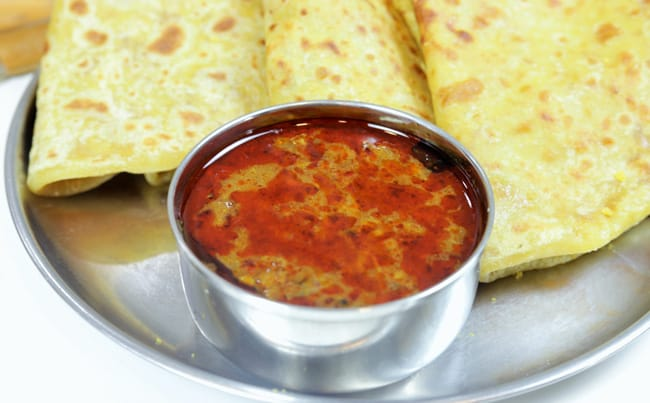
Katachi Amti is a traditional Maharashtrian curry known for its tangy flavour, aromatic spices, and comforting texture. Often prepared during festivals and special family meals, this popular dish is closely associated with Puran Poli, a sweet flatbread enjoyed during celebrations such as Gudi Padwa and Ganesh Chaturthi.
Made using the flavorful stock left after cooking chana dal, this curry transforms a simple ingredient into a delicious and satisfying meal. Its balance of spices, tamarind, and jaggery creates a distinctive taste that combines tanginess, sweetness, and warmth. For anyone exploring regional Indian cuisine, Katachi Amti offers a wonderful introduction to the rich culinary traditions of Maharashtra.
What Is Katachi Amti?
Katachi Amti is a traditional Maharashtrian dal-based curry prepared using the strained cooking liquid from chana dal, also known as split Bengal gram. This liquid, commonly called kat, contains flavour from the cooked lentils and serves as the base of the curry.
Instead of using whole lentils as the main ingredient, the recipe relies on this nutritious stock, along with spices and seasonings, to create a thin yet flavourful gravy. Some versions include a small amount of ground coconut or additional dal to give the curry more body.
The result is a comforting dish that pairs particularly well with Puran Poli, steamed rice, or other traditional Indian breads.
The Traditional Connection with Puran Poli
One of the most interesting aspects of Katachi Amti is its connection to Puran Poli. This sweet flatbread is prepared with a filling made from cooked chana dal and jaggery. During its preparation, the dal is cooked in water, which can be strained and reserved for the curry.
Rather than wasting this flavorful liquid, Maharashtrian home cooks use it to prepare a separate dish. The stock becomes the foundation of an aromatic curry seasoned with spices, tamarind, and jaggery.
This pairing creates a delicious contrast. The sweetness of Puran Poli complements the tangy and spicy flavours of the curry, making both dishes more enjoyable together.
Ingredients Used in Katachi Amti
Traditional recipes can vary from household to household, but several ingredients commonly contribute to its distinctive flavour.
- Chana dal stock: Provides the liquid base and flavour.
- Godā masala: A traditional Maharashtrian spice blend that adds depth and aroma.
- Tamarind: Brings a pleasant tanginess.
- Jaggery: Balances the acidity and spices with mild sweetness.
- Mustard seeds and cumin: Add warmth and fragrance to the tempering.
- Dried red chillies: Provide heat and colour.
- Curry leaves: Add an aromatic note in some variations.
- Coconut: Used in certain recipes for extra flavour and texture.
- Turmeric and salt: Enhance the overall seasoning.
The combination of sweet, sour, and spicy ingredients gives the curry its characteristic Maharashtrian taste.
How Is Katachi Amti Prepared?
Preparing this traditional curry begins with cooking chana dal until it becomes tender. The cooked dal is strained, and the remaining liquid is reserved for the curry. The dal itself can be used to prepare the sweet filling for Puran Poli.
To make the curry, oil or ghee is heated in a pan. Mustard seeds and cumin are added, followed by dried red chillies and other aromatic ingredients according to the recipe. Turmeric and godā masala are then mixed into the tempering.
The reserved dal stock is poured into the pan and brought to a gentle simmer. Tamarind and jaggery are added to create the traditional balance of tanginess and sweetness. Some cooks also include ground coconut or additional spices for a richer flavour.
The curry simmers until the ingredients blend together. Finally, the seasoning is adjusted, and the dish is served hot. Although the preparation is relatively simple, the quality of the spice blend and the balance of flavours make a noticeable difference.
What Does Katachi Amti Taste Like?
Katachi Amti is known for its complex yet comforting flavour. It typically combines the earthiness of lentil stock with the warmth of spices, the sharpness of tamarind, and the gentle sweetness of jaggery.
Godā masala gives the curry a distinctive aromatic character that separates it from many other Indian lentil dishes. Depending on the household recipe, it may be mildly spicy or have a stronger chilli flavour.
Its consistency is usually thinner than that of thick dal, allowing it to be enjoyed as a curry alongside rice, bread, or festive dishes.
Popular Ways to Serve Katachi Amti
This traditional curry is versatile enough to accompany several Indian meals. Here are some popular serving ideas:
With Puran Poli
The classic pairing combines sweet, stuffed flatbread with a tangy and spicy curry. It is especially popular during festive meals in Maharashtra.
With Steamed Rice
Serving the curry with steamed rice creates a simple and satisfying meal. The flavourful liquid mixes easily with the rice, making every bite aromatic.
With Indian Flatbreads
It can also accompany chapati, bhakri, or other traditional breads. These provide a hearty contrast to the curry’s lighter consistency.
As Part of a Maharashtrian Thali
A traditional thali may feature the curry alongside vegetables, rice, flatbreads, chutneys, and other regional preparations. This combination showcases the diversity of Maharashtrian food.
Why Try Katachi Amti at Saagar?
At Saagar, discovering regional Indian dishes is a way to experience the diversity of India’s culinary heritage. Katachi Amti stands out for its traditional preparation, aromatic spices, and distinctive balance of sweet and sour flavours.
Its connection to Puran Poli also makes it an interesting dish for anyone who wants to explore authentic Maharashtrian food beyond familiar curries. Whether enjoyed with rice or traditional flatbread, it offers a comforting taste of regional Indian cooking.
Conclusion
Katachi Amti is a wonderful example of how traditional Indian cooking makes thoughtful use of simple ingredients. Prepared from chana dal stock and seasoned with spices, tamarind, and jaggery, this Maharashtrian curry delivers a memorable combination of tangy, sweet, and savoury flavours.
Its traditional pairing with Puran Poli gives it a special place in festive meals, while its versatility makes it suitable for everyday dining too. For anyone interested in exploring the regional flavours of India, this classic curry is well worth discovering.