
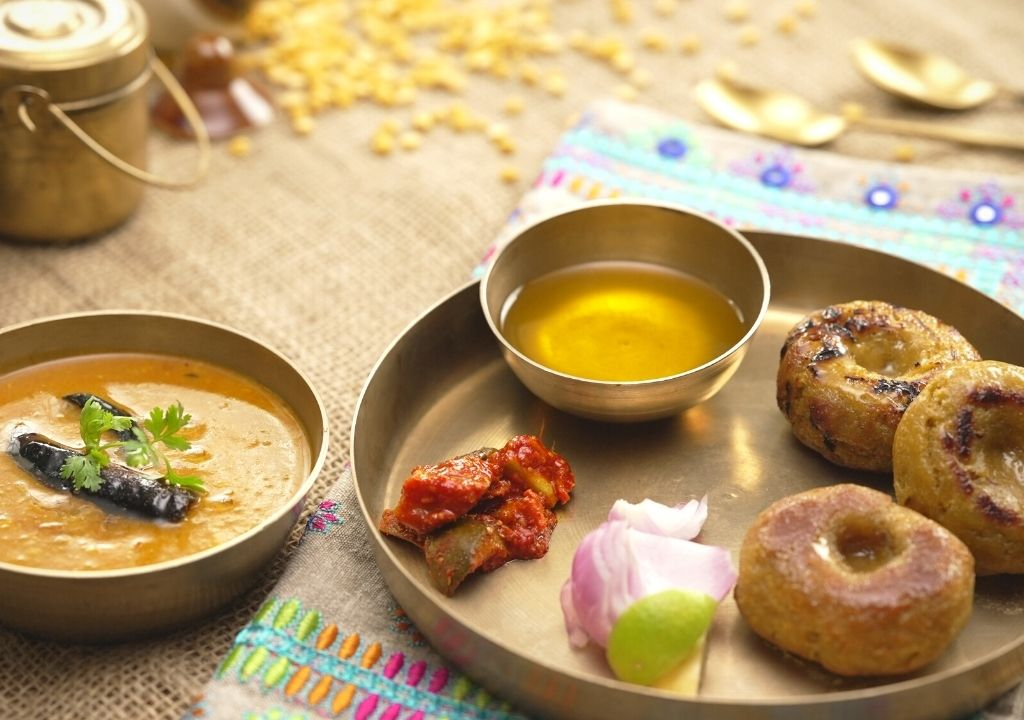
Dal Bafla is a popular traditional dish from Madhya Pradesh and parts of Rajasthan, known for its rich flavors, satisfying texture, and comforting taste. It combines baked or boiled wheat dough balls with flavorful lentil curry, making it a wholesome meal enjoyed by families across central India. Often served with ghee, chutney, and other accompaniments, this dish represents the simplicity and richness of Indian regional cooking.
What Is Dal Bafla?
Dal Bafla is a traditional Indian meal made with wheat flour dough balls that are first boiled and then baked or roasted until their outside becomes firm and slightly crisp. These baflas are served with dal, usually prepared using lentils, tomatoes, onions, and aromatic spices.
The dish is closely related to Rajasthan’s dal baati, but the preparation method gives bafla its own distinctive character. Boiling the dough balls before baking helps create a soft interior while the outer layer develops a satisfying texture. A generous amount of ghee is often added before serving, making the meal especially rich and flavorful.
Ingredients Used to Prepare Dal Bafla
The recipe uses simple ingredients commonly found in Indian kitchens. The main components are wheat-based bafla and a spiced lentil curry.
Ingredients for Bafla
- 2 cups whole wheat flour
- 2 tablespoons semolina
- 3 tablespoons ghee
- ½ teaspoon carom seeds
- ½ teaspoon salt
- Water as required
Ingredients for Dal
- ½ cup toor dal
- ¼ cup moong dal
- 1 onion, finely chopped
- 1 tomato, chopped
- 1 teaspoon ginger-garlic paste
- ½ teaspoon turmeric powder
- 1 teaspoon red chili powder
- ½ teaspoon cumin seeds
- ½ teaspoon garam masala
- 2 tablespoons oil or ghee
- Salt to taste
- Fresh coriander leaves
How to Make Dal Bafla at Home
Preparing this traditional dish involves making the dough, cooking the baflas, and preparing the lentil curry. Although it takes a little time, each step is straightforward.
Step 1: Prepare the Bafla Dough
Combine whole wheat flour, semolina, salt, carom seeds, and ghee in a mixing bowl. Gradually add water and knead until you have a firm, smooth dough. Cover it and let it rest for approximately 15 minutes.
Step 2: Shape and Boil the Baflas
Divide the dough into equal portions and shape them into round balls. Bring water to a boil in a large pot and carefully add the dough balls. Cook until they are firm and cooked through, then remove them and allow excess water to drain.
Step 3: Bake or Roast the Baflas
Place the boiled dough balls in a preheated oven and bake until their surfaces become golden and slightly crisp. They can also be roasted over a suitable cooking surface, turning regularly for even browning. Brush them with ghee while they are still warm.
Step 4: Cook the Dal
Wash the toor dal and moong dal, then cook them with water and turmeric until soft. In another pan, heat oil or ghee and add cumin seeds. Add chopped onions, ginger-garlic paste, and tomatoes. Cook until the mixture becomes soft and aromatic.
Add chili powder, garam masala, and salt. Mix in the cooked lentils and simmer for several minutes. Adjust the consistency with water and finish with fresh coriander leaves.
Step 5: Serve the Dish
Break the baflas slightly and pour warm dal over or alongside them. Add melted ghee for extra richness. The dish can be served with green chutney, garlic chutney, or a little pickle.
What Does Dal Bafla Taste Like?
One of the most enjoyable features of this meal is the contrast between its textures and flavors. The bafla has a firm exterior and a softer center, while the lentil curry provides a smooth, mildly spicy, and savory element.
Ghee adds richness and a pleasant aroma, while cumin, garlic, chili, and other spices give the dal its distinctive taste. Every bite brings together the hearty wheat base and flavorful lentils, creating a filling and satisfying combination.
Popular Accompaniments for Dal Bafla
This traditional meal is often served with several accompaniments that enhance its flavor. Some popular choices include:
- Garlic chutney: Adds a strong, spicy flavor.
- Green chutney: Provides freshness and a tangy taste.
- Pickle: Brings an extra layer of spice and acidity.
- Ghee: Makes the bafla richer and more aromatic.
- Churma: A sweet, crumbly wheat preparation that creates a pleasant contrast with the savory meal.
These additions make the dining experience more enjoyable and allow people to adjust the flavors according to their preferences.
Nutritional Value of Dal Bafla
The dish contains wheat flour, lentils, and ghee, providing a combination of carbohydrates, plant-based protein, and fats. Lentils contribute protein and dietary fiber, while whole wheat flour provides energy and additional fiber.
However, the overall nutritional value depends on portion size, cooking methods, and the amount of ghee used. Those looking for a lighter meal can reduce the added fat and serve moderate portions with fresh vegetables or salad.
Why Dal Bafla Is Popular in Indian Cuisine
Dal Bafla remains an important part of central India’s traditional food culture. It is enjoyed at family gatherings, festive meals, and special occasions because it is filling, flavorful, and made with familiar ingredients.
Its preparation reflects the creativity of regional Indian cooking, where basic ingredients are transformed into satisfying meals through traditional techniques. The combination of wheat-based bafla, spiced lentils, and ghee has helped the dish remain popular across generations.
Enjoy Traditional Indian Flavors at Saagar
Indian cuisine offers a wide variety of regional specialties, each bringing its own ingredients, cooking techniques, and flavors to the table. Dal Bafla is a wonderful example of this diversity, combining simple wheat dough and lentils into a comforting traditional meal.
Guests exploring Indian food at Saagar can discover a range of delicious flavors and regional culinary inspirations. Check the restaurant’s current menu for available dishes and enjoy the experience of traditional Indian dining.
Conclusion
Dal Bafla is a hearty and flavorful Indian dish that brings together baked wheat dough balls, spiced lentil curry, and aromatic ghee. Its distinctive preparation, satisfying texture, and traditional accompaniments make it a memorable part of central Indian cuisine. Whether enjoyed at home or discovered while exploring Indian food, it offers a delicious way to experience the richness of regional cooking.