
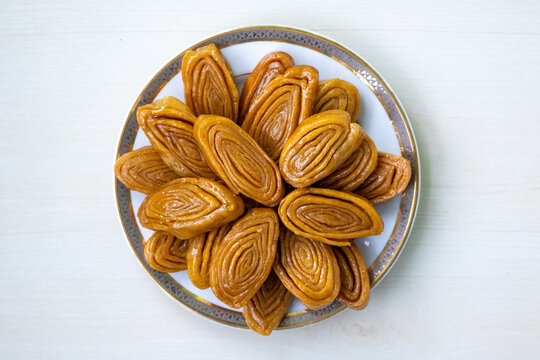
Goja is a traditional Indian sweet known for its crisp exterior, rich texture, and satisfying sweetness. Found in different regional forms across the Indian subcontinent, it is particularly associated with eastern Indian sweet-making traditions. Made from simple ingredients such as flour, sugar, and ghee or oil, this sweet demonstrates how basic ingredients can be transformed into something special through careful preparation.
Depending on the region, Goja may be prepared in different shapes, textures, and levels of sweetness. Some versions are deep-fried and dipped in sugar syrup, while others have a dry, crisp finish. At Saagar, we celebrate the variety of Indian cuisine and the traditional sweets that have been enjoyed across generations.
What Is Goja?
Goja is generally a fried flour-based sweet prepared by shaping dough into small pieces and cooking them until golden and crisp. Sugar syrup is often used to provide sweetness, although regional recipes can vary.
Its appeal comes from the contrast between the crunchy outer layer and the sweet, flavorful interior. The preparation may look simple, but achieving the right texture requires attention to the dough, frying temperature, and sugar syrup.
Like many traditional Indian sweets, Goja has developed several regional variations. Recipes may differ according to local ingredients, family traditions, and preferred textures.
Traditional Ingredients
A basic preparation may use:
- Refined flour or maida
- Sugar
- Ghee
- Water
- Cardamom
- Cooking oil
- Baking soda, optional
- Nuts, optional
Some recipes use ghee directly in the dough to create a richer flavor and crispier texture. Cardamom may be added to the sugar syrup or dough for fragrance.
The simplicity of these ingredients makes the sweet an interesting example of traditional Indian confectionery.
How Is Goja Prepared?
The process begins by preparing a firm dough using flour, ghee, and water. The dough is kneaded until smooth and then allowed to rest.
It is divided into small portions and shaped according to the desired style. The pieces are then deep-fried over controlled heat until they become golden brown.
Meanwhile, sugar syrup is prepared separately. Sugar is dissolved in water and cooked until it reaches the appropriate consistency. Cardamom or other flavoring ingredients may be added.
The fried pieces are then coated or soaked in the syrup. Once the syrup begins to set, the sweet develops its characteristic glossy appearance and sweetness.
The exact method depends on the regional variation being prepared.
The Importance of the Dough
The texture of Goja depends greatly on the dough.
A dough that contains the right amount of ghee can produce a delicate, crisp texture after frying. Too much water may make the dough difficult to shape or result in an undesirable texture.
Resting the dough can also make it easier to handle.
Traditional sweet makers pay close attention to these small details because they can determine whether the final product is light and crisp or dense and hard.
Getting the Frying Temperature Right
Deep frying is one of the most important stages of preparation.
If the oil is excessively hot, the outside can brown quickly while the inside remains insufficiently cooked. If the temperature is too low, the dough can absorb excessive oil.
A controlled, moderate temperature allows the pieces to cook evenly and develop a golden exterior.
The finished sweet should have a pleasant crispness without an overly oily texture.
The Role of Sugar Syrup
Sugar syrup determines much of the final sweetness and texture.
The syrup must be cooked to the appropriate consistency. A syrup that is too thin may fail to coat the fried pieces properly, while one that is too thick can create an excessively hard sugar coating.
Cardamom is commonly used to add fragrance, although some regional recipes may include other spices or flavorings.
The combination of crisp fried dough and aromatic syrup creates the characteristic appeal of this traditional sweet.
Regional Variations
One fascinating aspect of Indian sweets is the number of regional interpretations that exist.
A sweet with the same or similar name can have different shapes, ingredients, or preparation methods depending on where it is made. Some versions may be softer, while others are deliberately crisp.
Certain recipes may use additional ingredients such as coconut, nuts, or aromatic spices.
These variations reflect the diversity of Indian culinary traditions and demonstrate how recipes evolve according to local preferences.
When Is Goja Served?
Traditional sweets like this are often associated with celebrations and special occasions. They can be prepared or purchased for:
- Festivals
- Weddings
- Religious celebrations
- Family gatherings
- Cultural events
- Special meals
- Guest hospitality
Sweets also hold an important social role in many Indian communities. Offering a sweet to guests is often associated with hospitality and celebration.
Best Ways to Enjoy It
Goja can be enjoyed on its own as a snack or dessert. Its crisp texture makes it particularly satisfying alongside a cup of tea or coffee.
It can also be included in a larger Indian dessert platter alongside other traditional sweets.
For the best experience, it should be served fresh enough to retain its desired texture. Depending on the style, it can be enjoyed at room temperature or slightly warm.
Its sweetness also makes it a natural choice for finishing a hearty Indian meal.
A Sweet Connected to Indian Food Heritage
Traditional sweets are an important part of India’s culinary identity. Recipes are often passed down through generations, with techniques learned through observation and practice.
Goja represents this tradition of turning simple pantry ingredients into a celebratory food. Flour, sugar, ghee, and spices may seem ordinary individually, but skilled preparation can transform them into a memorable dessert.
The process also highlights the importance of texture in Indian confectionery. Crispness, syrup consistency, aroma, and appearance all contribute to the final experience.
Why Choose Saagar?
At Saagar, we believe Indian cuisine is best appreciated through its incredible variety. Regional sweets offer a glimpse into the traditions, celebrations, and everyday food culture of different communities.
Our goal is to bring together authentic flavors and familiar culinary traditions while giving guests opportunities to discover lesser-known specialties.
Whether you enjoy classic Indian sweets or are interested in trying something different, traditional desserts such as Goja offer a delicious way to explore India’s rich culinary heritage.
Conclusion
Goja is a delightful traditional sweet that showcases the skill and simplicity of Indian confectionery. Its combination of crisp fried dough, sweetness, ghee, and aromatic spices creates a satisfying dessert suitable for celebrations, family gatherings, or an everyday sweet craving.
Regional recipes can vary considerably, making the dish even more interesting to explore. Each variation reflects the local ingredients and traditions that have shaped Indian food over generations.
At Saagar, we proudly celebrate India’s diverse culinary heritage and invite you to discover the traditional flavors, textures, and stories behind regional Indian sweets.